
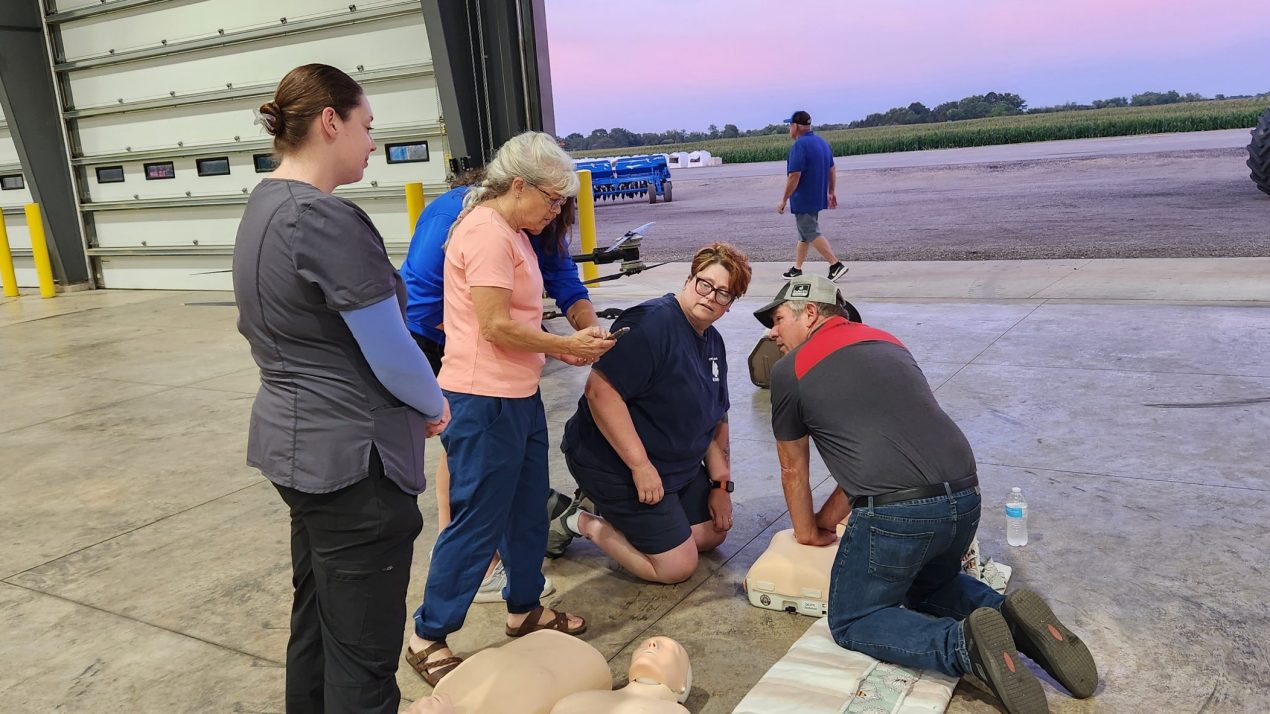
Every second matters during a medical emergency in rural areas. Farmland and remote roads often push emergency response times past 30 minutes. During a recent twilight meeting of the Yahara Pride Farms group, Dane County Emergency Management Assistant Director, Carrie Meier, highlighted the growing need for community preparedness. Meier explained that today’s emergency responders often enter the workforce through specialized medical programs. That means MOST do not have any farming background at all. This shift creates a critical gap in rural emergency response experience.
Emergency management officials bridge this gap through mutual education. First responders teach citizens essential safety techniques while rural residents and farms are encouraged to share practical farm knowledge with response teams. Time remains the most critical factor during severe trauma or cardiac arrest. Meier says a person’s survival chances drop by 10% for every minute their heart stops without CPR.
Modern emergency protocols focus on simple, high-impact actions. Modern hands-only CPR eliminates the need for mouth-to-mouth resuscitation. Anyone can perform effective chest compressions without complex training. Many local 911 dispatchers will guide bystanders through every step, count compressions aloud, and dispatch proper resources immediately.
Youth groups could play a key role in spreading these life-saving skills. Organizations like 4-H, FFA, and local youth clubs have ideal settings for emergency training. Young people learn quickly, remain calm under pressure, and master dispatch instructions easily. Free 30-minute training sessions build the confidence needed to handle real-world emergencies.
Interested people can explore local training options through the Dane County Emergency Management Department. Community members can also access official guidelines on American Red Cross Hands-Only CPR Training to prepare for critical situations. Taking action quickly keeps neighbors safe and saves lives across our community.
